
Poured Concrete vs. Paver Patios: Pros & Cons
When it comes to upgrading your outdoor living space, few decisions carry more long-term weight than choosing the right patio material. Homeowners across the country face the same dilemma every year: should you go with poured concrete patios or invest in a paver patio comparison to find the best fit? Both are popular hardscape options with loyal followings, and both come with real trade-offs worth understanding before you commit.
This guide breaks down everything you need to know about concrete vs pavers so you can make a confident, informed choice for your home.
The Case for Poured Concrete Patios
Poured concrete patios have been a go-to choice for homeowners for decades, and for good reason. When it comes to upfront affordability, concrete is tough to beat. The installation process is relatively straightforward: a crew prepares the ground, sets forms, pours the concrete mix, and finishes the surface. Labor and material costs are generally lower than comparable paver installations, which makes poured concrete an attractive entry point for homeowners working within a budget.
Beyond cost, poured concrete offers a smooth, continuous surface that works well for outdoor furniture, dining sets, and high-traffic areas. There are no gaps or joints to worry about, which means less maintenance in terms of weeds pushing through or individual pieces shifting over time. Modern finishing techniques have also expanded the visual appeal of this patio material significantly. Stamped concrete, exposed aggregate, and staining options allow homeowners to mimic the look of stone, brick, or tile at a fraction of the cost of natural materials.
Durability is another strong point. A properly installed concrete slab can last 25 to 50 years with minimal intervention. When sealed regularly, it resists moisture penetration, staining, and surface wear reasonably well. For homeowners who want a low-effort, long-lasting outdoor flooring solution that does not demand constant attention, poured concrete checks a lot of boxes.
The Drawbacks of Concrete Slabs
No patio material is perfect, and poured concrete has some well-documented limitations. The most significant is cracking. Concrete expands and contracts with temperature changes, and over time, that movement causes cracks to form. In climates with harsh winters or extreme heat cycles, this process accelerates. While control joints are built into slabs to manage where cracking occurs, they do not prevent it entirely. Once a slab cracks, repairs can be noticeable and difficult to blend seamlessly with the surrounding surface.
Concrete also presents a drainage challenge. Because it is a solid, continuous surface, water runoff must be carefully directed during installation. Poor grading can lead to pooling, which not only creates a nuisance but can also undermine the slab over time. Homeowners in regions with heavy rainfall need to pay close attention to drainage planning before pouring begins.
On the aesthetic side, while stamped and stained concrete can look impressive when new, the finishes tend to fade and wear over the years. Re-sealing and occasional re-staining are necessary to keep the surface looking its best. And if a section of the slab is severely damaged, the entire area often needs to be broken up and repoured, which is a costly and disruptive process. Removal costs are also higher, since concrete slabs must be demolished and hauled away if you ever want to change the design.
Why Homeowners Love Paver Patios
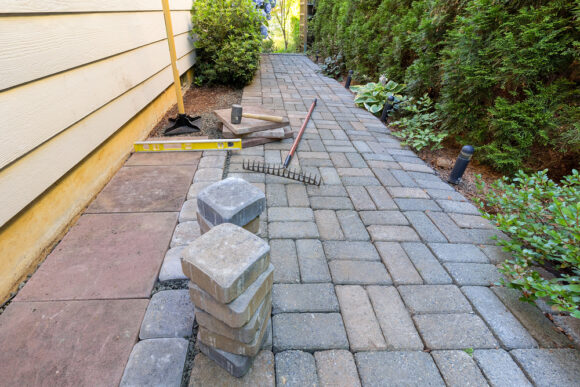
A paver patio comparison almost always highlights one standout advantage: flexibility. Pavers come in an enormous range of materials including concrete pavers, clay brick, natural stone, and porcelain, giving homeowners far more design freedom than a poured slab. You can create intricate patterns, mix colors, and build shapes that a poured concrete pour simply cannot replicate without significant added cost.
Installation flexibility is another major selling point. Pavers are laid on a compacted base of gravel and sand, which means they can be installed and adjusted more easily than a poured slab. If a paver cracks, chips, or shifts, you can lift and replace that single piece without disturbing the rest of the patio. This makes long-term repairs far simpler and less expensive, which is a genuine advantage when comparing hardscape options over a 20 to 30 year time horizon.
Pavers also handle drainage more naturally. The joints between individual pieces allow water to filter through the surface rather than run off in sheets, reducing puddle formation and helping manage stormwater on your property. For homeowners in areas with heavy rainfall, this permeability is a meaningful functional benefit. Additionally, pavers tend to hold up well in freeze-thaw cycles because individual pieces can shift slightly without causing the kind of widespread cracking that plagues monolithic concrete slabs.
The Challenges of Paver Installations
While paver patios offer compelling benefits, they come with their own set of challenges. The most immediate is cost. Paver installations typically run higher than poured concrete, both in materials and labor. Natural stone pavers in particular can be quite expensive, and the precision required to lay a well-aligned, properly graded paver surface takes skilled hands and time. For homeowners on a tight budget, the upfront investment can be a significant barrier.
Maintenance is also more involved with pavers than many people expect. The joints between pavers are filled with sand or polymeric sand to lock pieces in place and resist weed growth, but over time that joint material can wash away, settle, or become a foothold for grass and weeds. Periodic re-sanding and sealing is necessary to keep a paver patio looking sharp. In shaded or damp environments, pavers can also develop moss or algae growth that requires cleaning to prevent slipping hazards.
Settling is another concern. If the base material beneath the pavers is not prepared correctly, individual pavers can shift, sink, or heave over time, creating an uneven surface that is both unsightly and potentially hazardous. Proper base preparation is critical, and cutting corners during installation often leads to costly repairs down the road.
Comparing Long-Term Value and Practicality
When evaluating outdoor flooring choices from a long-term perspective, both poured concrete patios and paver installations have genuine merit. The right choice depends heavily on your budget, your climate, your design preferences, and how much ongoing maintenance you are willing to handle.
From a return-on-investment standpoint, pavers tend to add slightly more perceived value to a home because of their visual appeal and the ease of repair. Real estate professionals often note that well-designed paver patios photograph well and appeal to buyers during resale. Concrete, while functional, can look dated or worn after years of weathering unless it has been consistently maintained and sealed.
Climate plays a major role in this decision as well. Homeowners in colder regions like the Midwest or Northeast often find that pavers outperform concrete slabs over time because they handle freeze-thaw movement better at the joint level. In warmer, more stable climates like the Southwest, poured concrete holds up quite well and its lower cost becomes an even more attractive feature.
For large, simple installations where budget is the primary concern, poured concrete remains a practical and reliable choice. For homeowners who want design flexibility, easier repairs, and a patio material that can be modified or expanded over time, pavers are worth the additional investment. Thinking through these factors carefully before construction begins will save you money, frustration, and regret in the years ahead.
Conclusion
Choosing between poured concrete patios and paver patios is not a one-size-fits-all decision. Both are strong hardscape options with distinct advantages depending on your priorities. Concrete offers affordability and simplicity, while pavers deliver design freedom and long-term adaptability. By weighing the pros and cons against your specific needs, climate, and budget, you can select the outdoor flooring solution that will serve your home well for years to come.
Need a Premier Commercial & Residential Landscaper Near You?
When you are ready to elevate your outdoor space, our team at Twin Oaks Landscaping, Inc. is here to bring your vision to life with expert craftsmanship and personalized care. We proudly serve Banner Elk, North Carolina with premier landscaping solutions for both residential and commercial properties, from detailed landscape design and seamless installation to hardscapes, pavers, tree services, erosion control, drainage, ongoing maintenance, mulch installation, and seasonal snow removal. Whether you are planning a complete transformation or need dependable year round upkeep, you can trust our experienced landscapers to deliver results that enhance beauty, function, and value. Give us a call today!